The medical campus, reimagined in the metaverse
Kashmeta is building an immersive VR/XR campus where medical students attend live classes, explore 3D anatomy and rehearse clinical procedures together — from anywhere in the world.
Supported by

Medical training is hard to scale
Traditional medical education struggles with the same problems everywhere. Kashmeta gives every student hands-on practice in a shared virtual space — safely, repeatedly and remotely.
Enhance medical training
Anatomical visualisation and surgical simulation that turn theory into hands-on practice.
Foster global collaboration
Tele-mentoring and collaborative surgery that connect students with mentors and clinicians worldwide.
Revolutionise accessibility
Remote diagnostics and immersive therapy that bring quality medical learning to anyone, anywhere.
Purpose-built spaces for medical education
One connected campus. Students teleport between rooms, see each other as avatars and talk naturally with spatial voice.
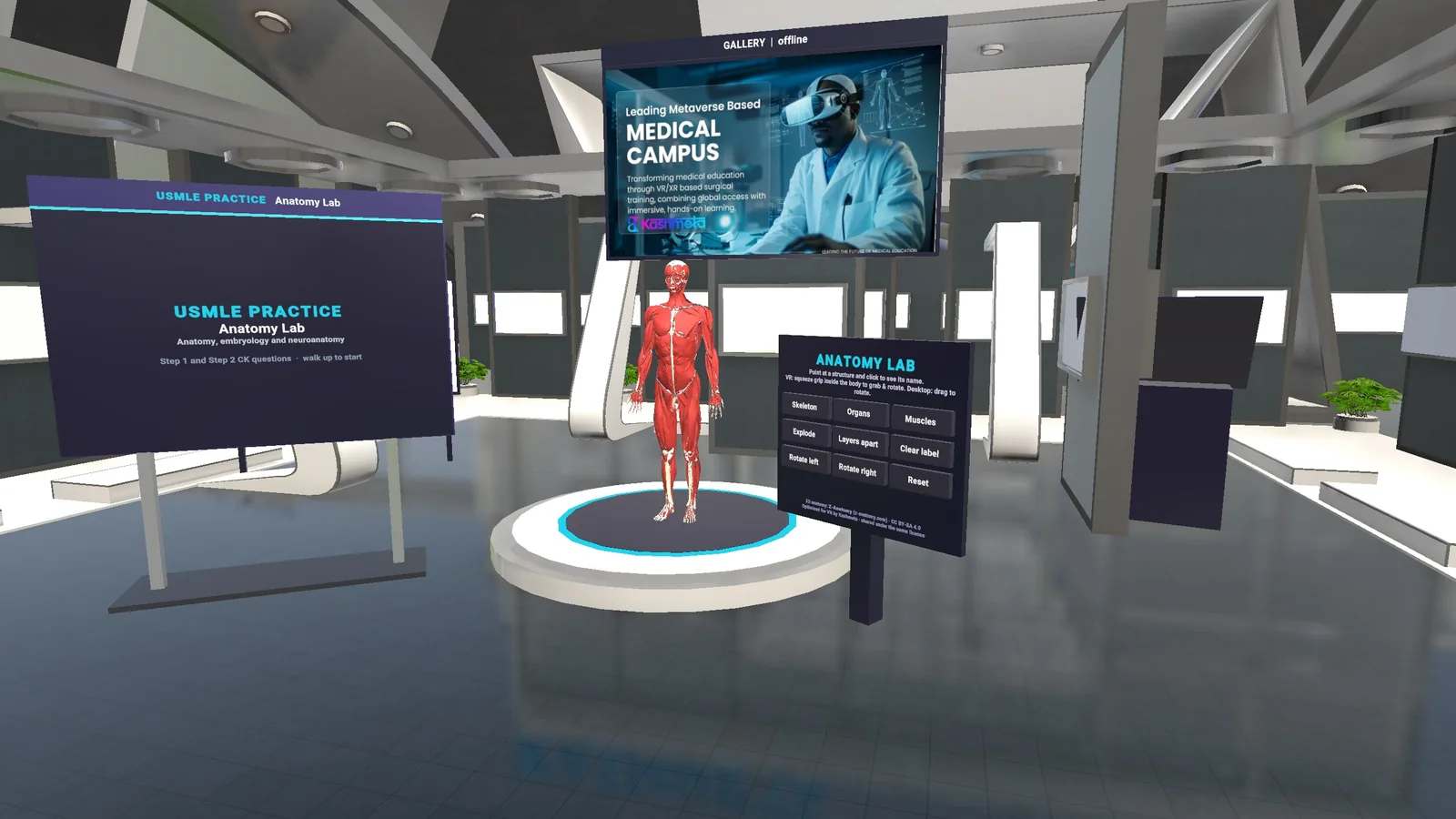
Anatomy Lab
Grab, rotate and take apart a full-body 3D model — skeleton, organs and muscles, with every structure labelled.
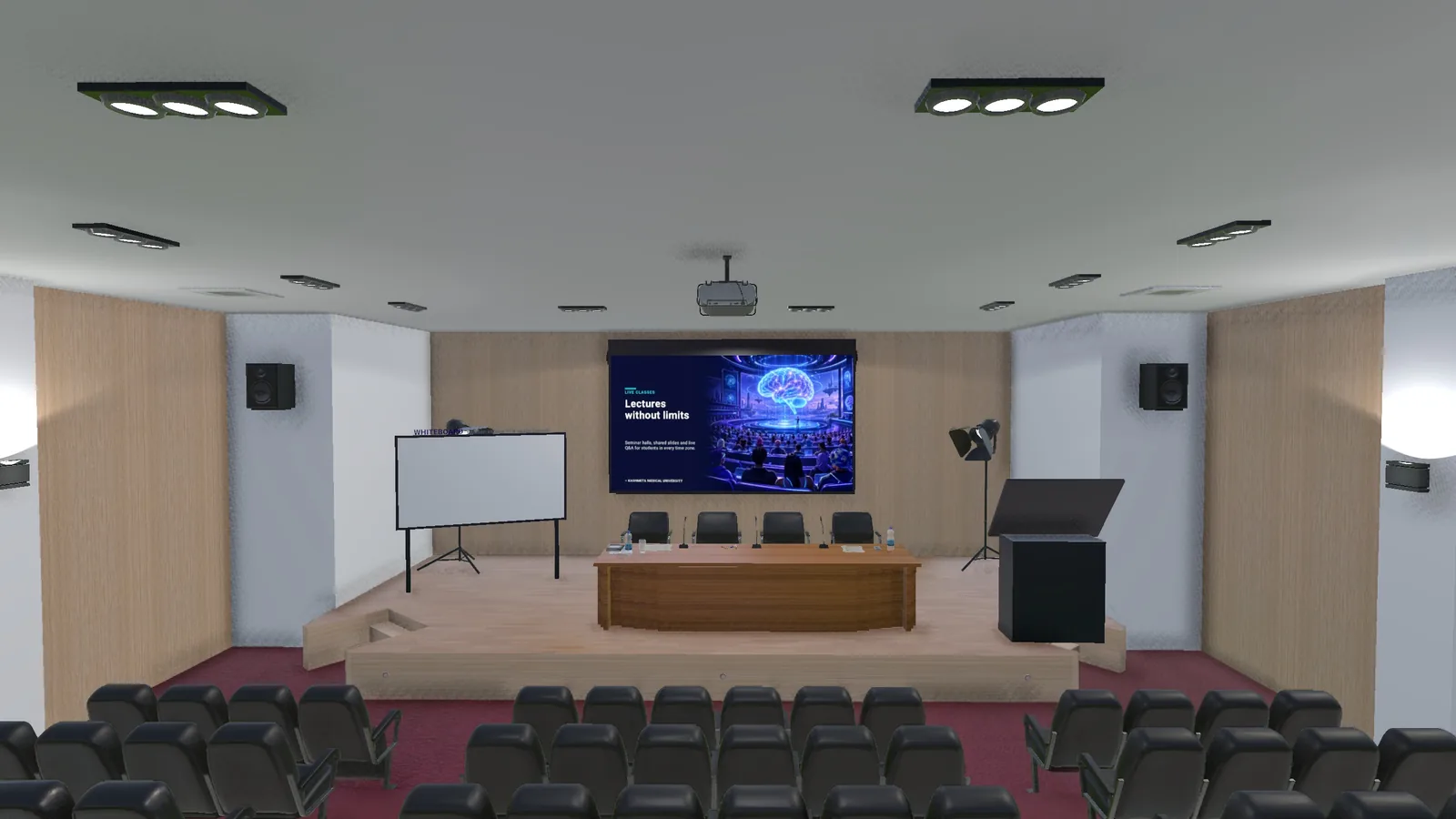
Lecture Auditorium
Live lectures with shared slides, a laser pointer and video on the big screen.
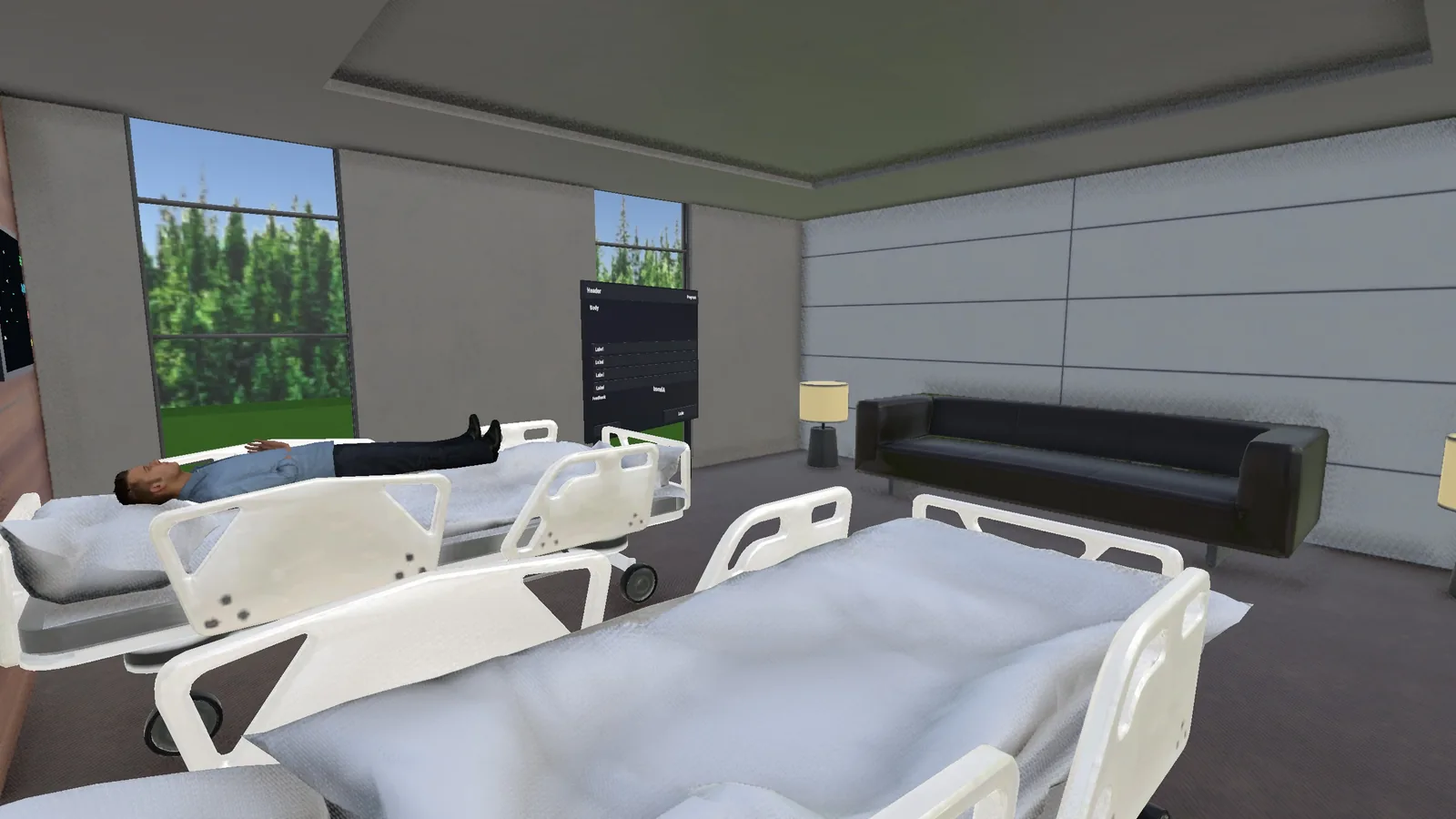
Emergency Room
Rehearse emergency and surgical scenarios as a team, as often as needed.
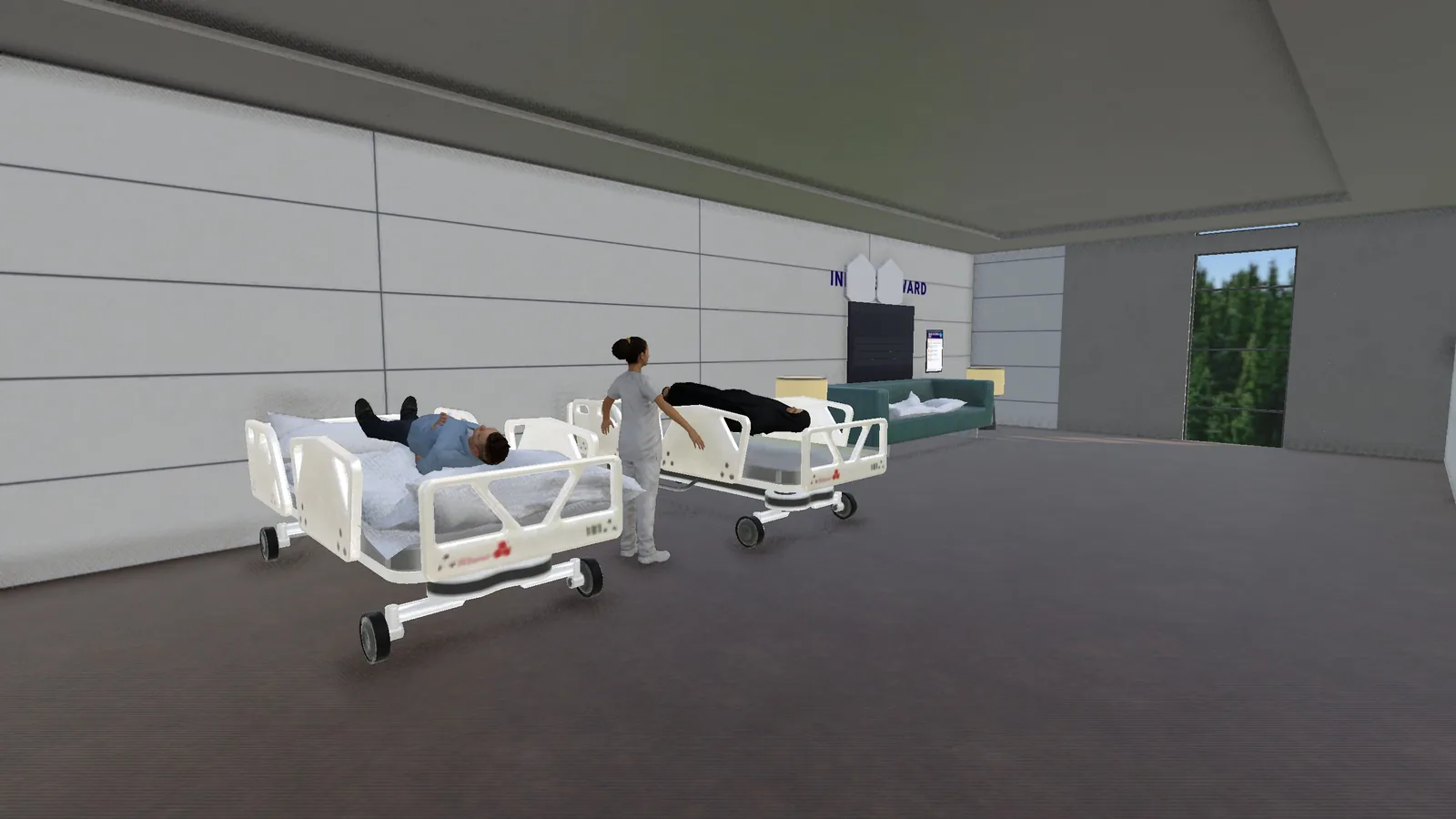
Clinics & Wards
GP and psychology clinics plus an inpatient ward where students assess virtual patients.
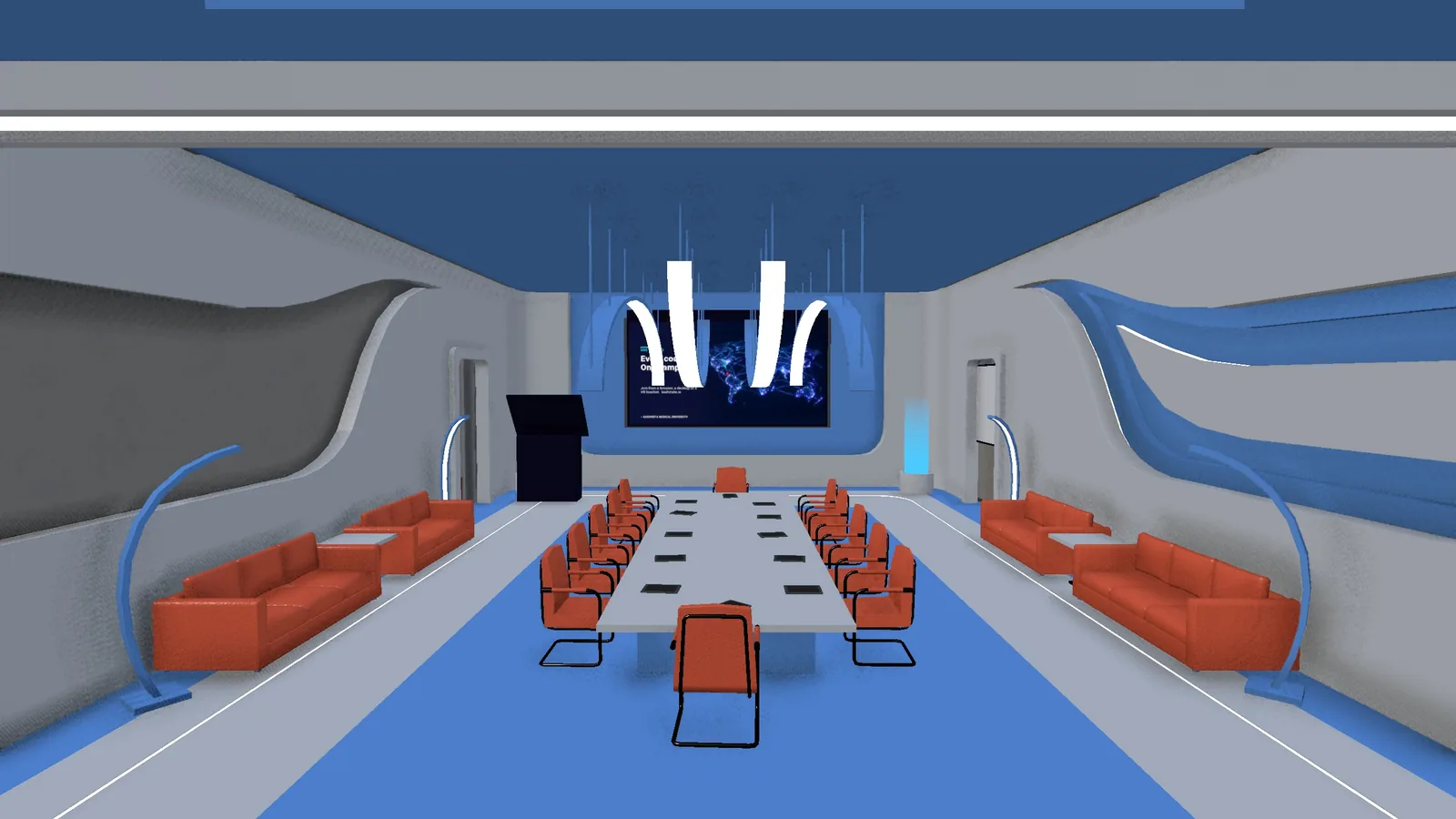
Conference Room
Faculty meetings, case reviews and presentations in an immersive setting.
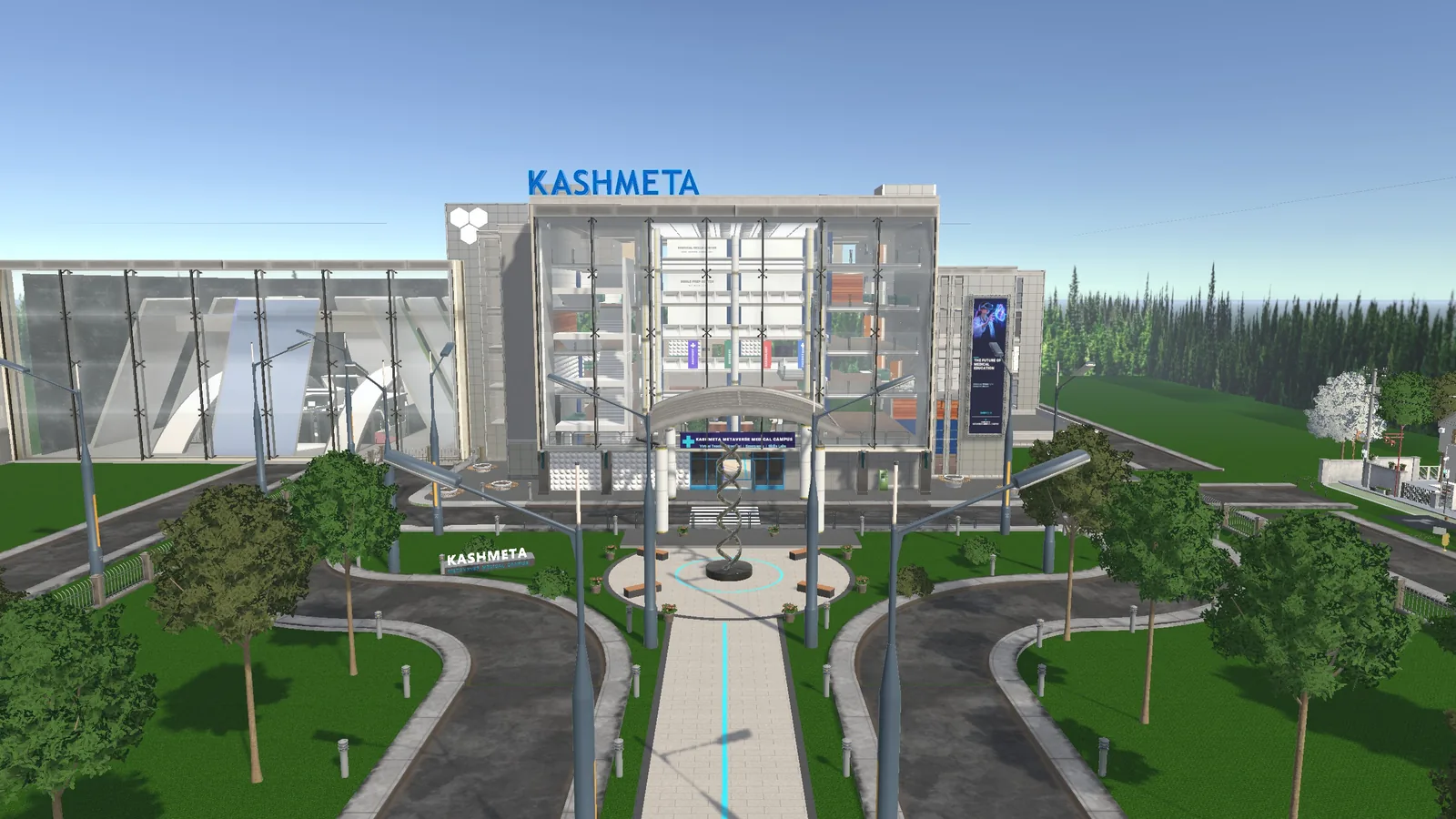
Step inside the Kashmeta Building
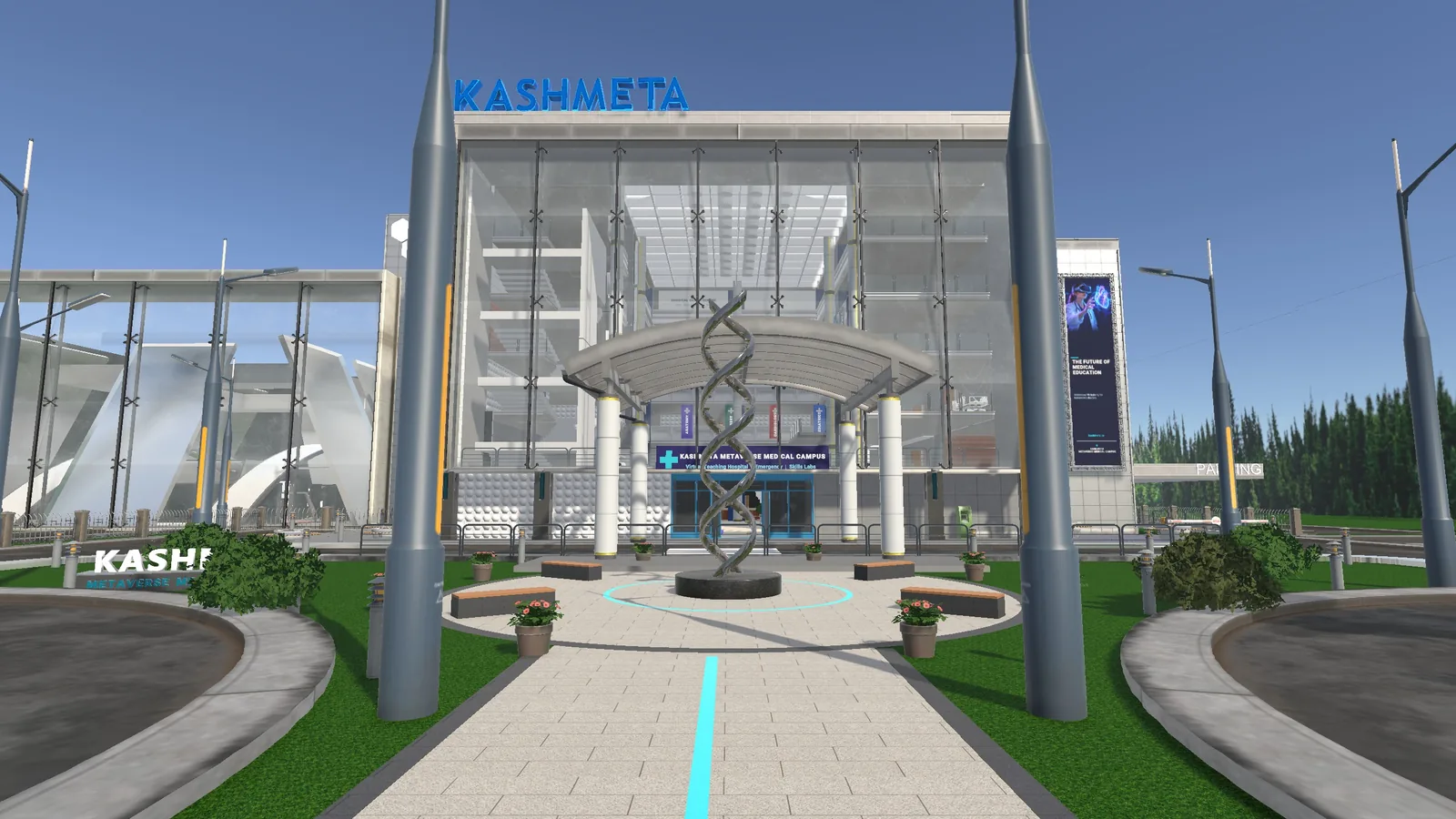
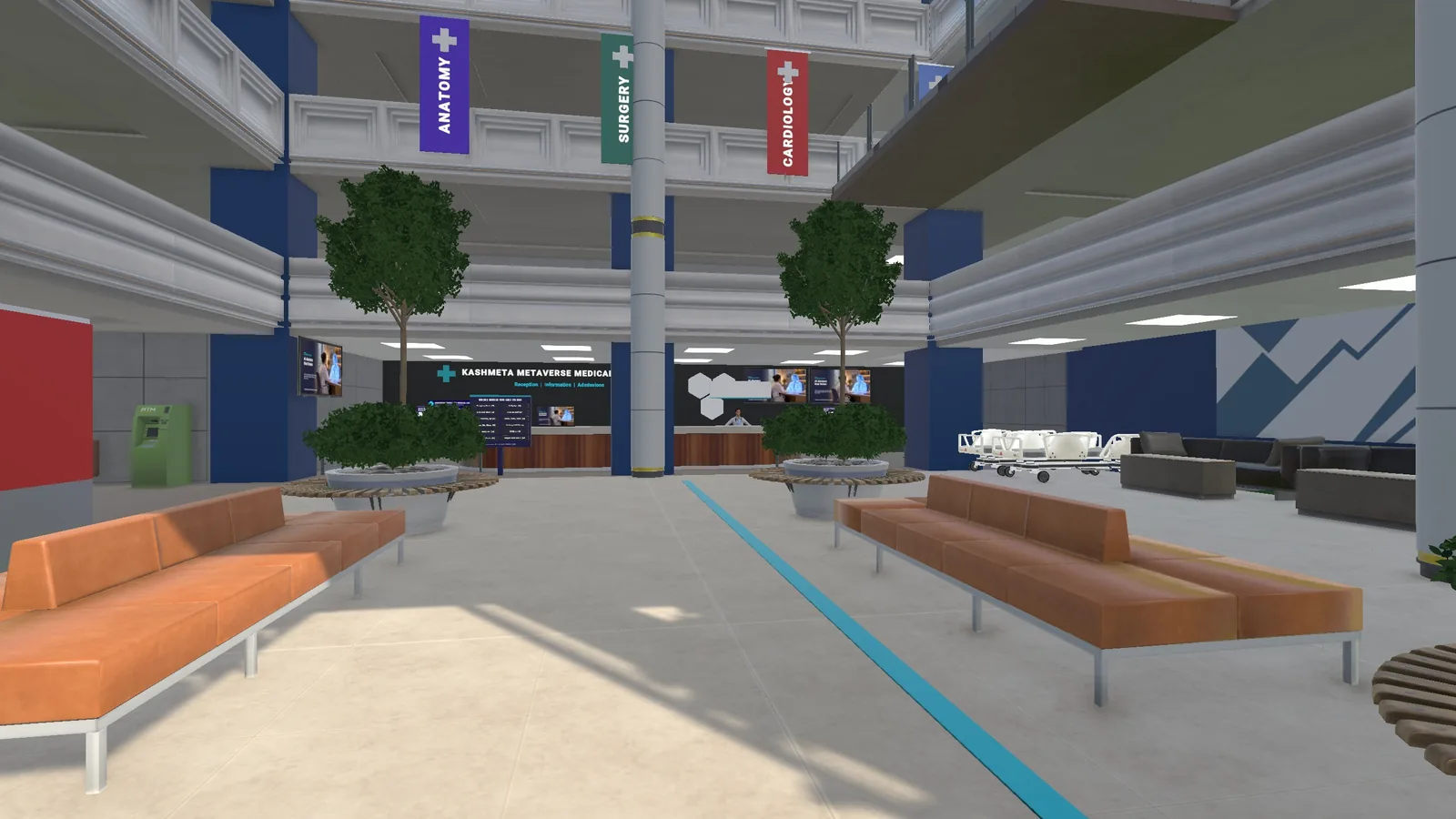
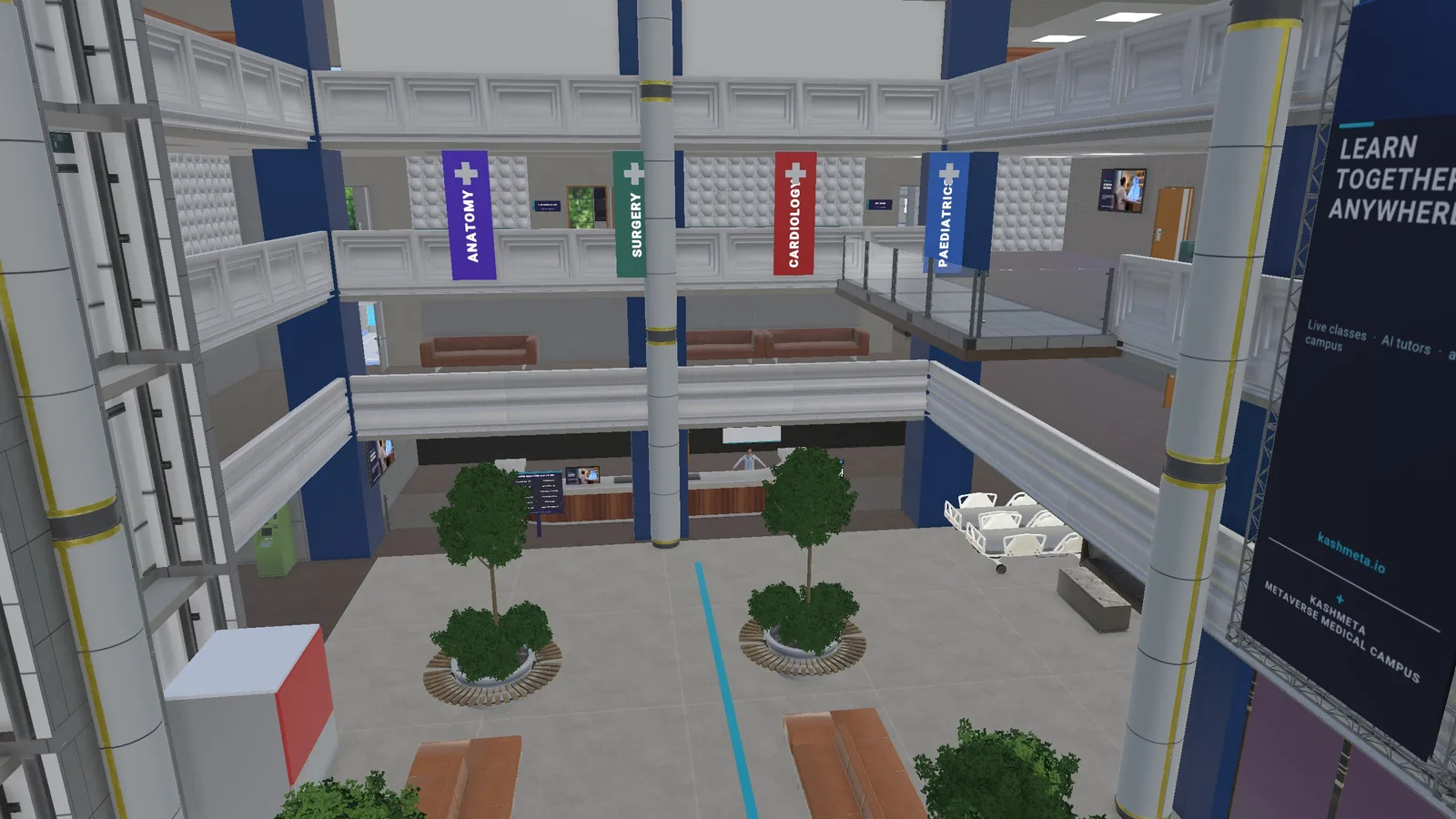
Our working prototype is live: a six-storey medical campus with reception, lecture auditorium, conference room, emergency room, clinics, labs, an inpatient ward and a 3D anatomy lab — explorable in your browser today and in VR on Meta Quest.
Practise before the operating room
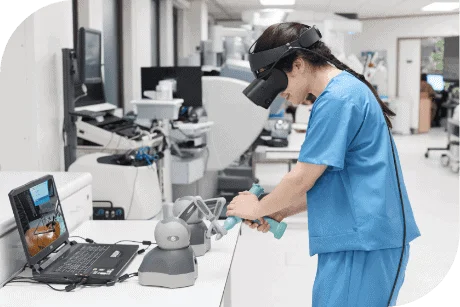
VR training bridges the gap between theory and practice. Learners rehearse complex procedures with lifelike precision and build confidence before they ever touch a patient.
- Risk-free repetition — mistakes become lessons, not incidents.
- Consistent quality — every student gets the same high-standard scenario.
- Accessible anywhere — no cadaver lab or simulation centre required.
- Real-time guidance — instructors observe and coach inside the session.
Higher procedure completion with VR training — 78% of learners trained in VR completed an intramedullary tibial nail procedure, versus 25% with a traditional PDF guide.Orland et al., randomized controlled trial of VR training for intramedullary tibial nailing.
Start small. Scale across your faculty.
We work with institutions to pilot the campus with real classes and adapt it to their curriculum.
Book a demo
See the campus live and discuss your courses, cohort size and learning goals.
Run a pilot
Bring one class into the virtual campus on Meta Quest headsets or desktop, with our team supporting you.
Scale up
Expand to more subjects, custom content and your own branded campus spaces.
Recognised at home and abroad
Focused on the UN Sustainable Development Goals: SDG 4 Quality Education and SDG 9 Industry, Innovation & Infrastructure.
Engineers and clinicians, building together

Engr. Fakhar Jabran
MS Software Engineering · Certified Metaverse Expert · Member, Prime Minister’s National Youth Council · Commonwealth Peace Award winner · PM Awardee

Dr. Halima Sadia
MBBS, Nishtar Medical University

Dr. Tehmina Sheharyar
Postdoctoral Researcher, Stanford University · PhD Software Engineering · Computer vision expert in medical imaging
The team behind the campus
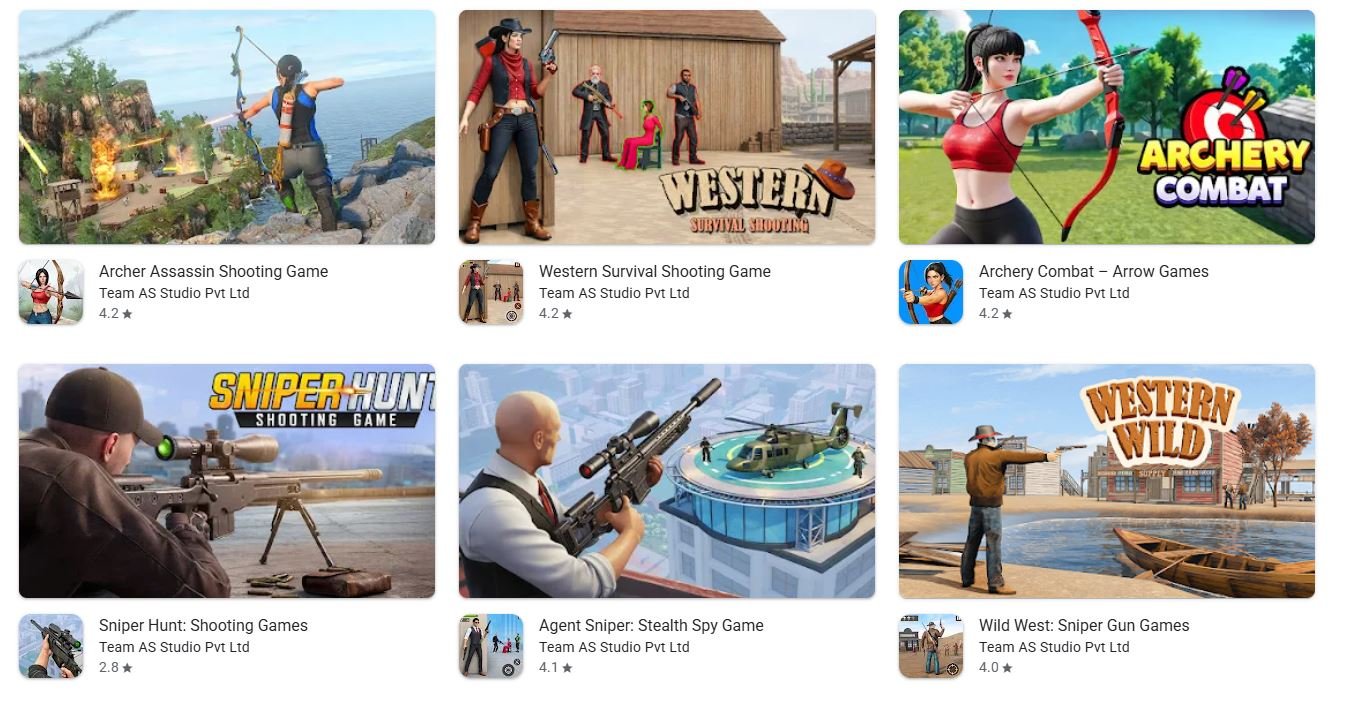
Beyond medical education, our studio designs and builds immersive products — from VR, AR and mixed-reality experiences to 3D mobile games for iOS and Android.
Shape the future of medical education with us
Whether you lead a medical school or want to invest in immersive health education, we’d love to talk.