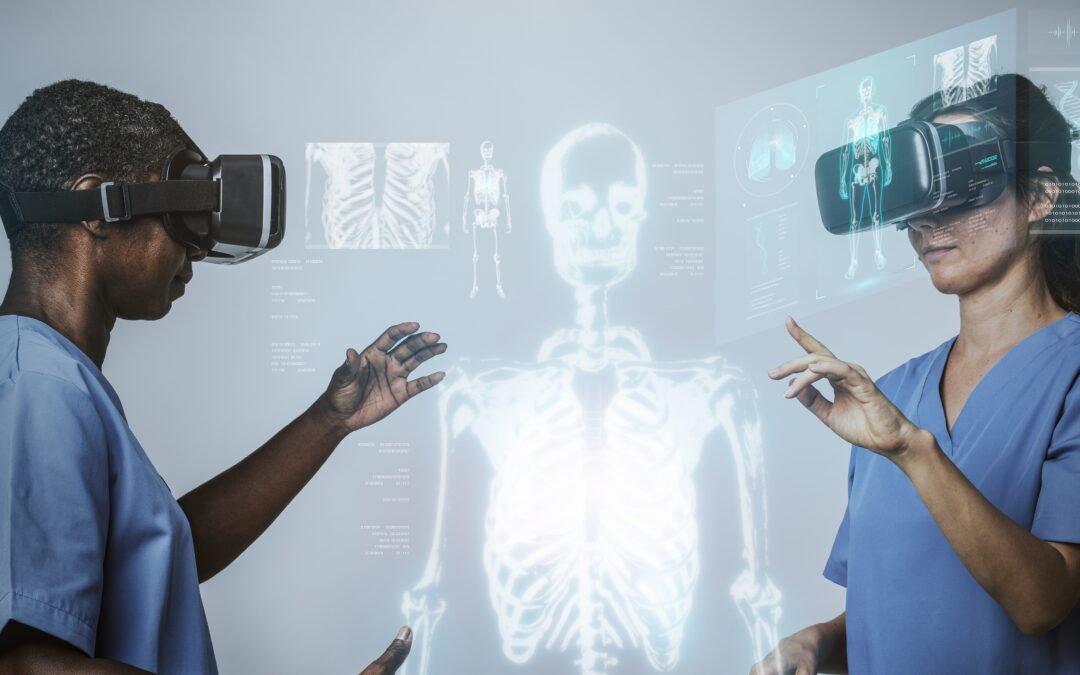
Before students can interpret a deteriorating patient, they need a fast, reliable routine for checking vital signs and examining at the bedside. That routine is built through repetition, and the ward is not always the place to repeat it. A virtual ward lets students practise the full sequence, from oxygen saturation to a 12-lead ECG and an early warning score, as often as they need.
Bedside examination practice in a virtual ward helps medical students build a consistent routine for vital signs and early warning scores before they meet acutely unwell patients. On Kashmeta, students can check oxygen saturation, breathing, blood pressure with Korotkoff sounds, temperature, blood sugar and capillary refill, listen to the heart and lungs, record a 12-lead ECG and score a NEWS2 chart, in a browser.
Why a bedside routine matters
Deterioration is often visible in the observations hours before a crisis. Students who check every vital sign the same way each time, record it accurately and know what the numbers mean are the ones who spot it. A routine also frees attention for the patient: what they look like, what they say and what has changed.
What students can practise in the Kashmeta virtual ward
- Oxygen saturation and respiratory rate: count breathing and read the pulse oximeter.
- Blood pressure: use a virtual cuff and stethoscope and listen for Korotkoff sounds.
- Temperature, blood sugar and capillary refill: complete the set of basic observations.
- Heart and lung sounds: listen with the stethoscope at the right positions.
- 12-lead ECG: record an ECG as part of the assessment.
- NEWS2: score the observations on a chart and decide what the score means for escalation.
A simple ABCDE-style practice sequence
- Airway and breathing: look, listen, count the respiratory rate and check saturation.
- Circulation: pulse, blood pressure, capillary refill, heart sounds and an ECG.
- Disability: level of consciousness and blood sugar.
- Exposure: temperature and anything else the story suggests.
- Score and escalate: complete the NEWS2 chart and decide who you would call and how urgently.
Follow the approach your medical school teaches; this sequence is a practice aid, not a clinical protocol.
From observations to decisions
Once the routine is automatic, students can move on to emergency team cases, where the same observations drive decisions under time pressure, and to clinical case boards on the wards. Pair bedside practice with history taking with AI patients to rehearse a full clerking.
Open the campus free for 30 minutes in Chrome or Edge and head to the inpatient ward. For a tour of every floor, read inside the Kashmeta campus.
Frequently asked questions
Can medical students practise vital signs in VR?
Yes. A virtual ward lets students practise checking oxygen saturation, respiratory rate, blood pressure, temperature, blood sugar and capillary refill, and scoring them, as often as they need.
What is NEWS2?
The National Early Warning Score 2 is a scoring system for vital signs used to detect and respond to clinical deterioration.
Can I hear Korotkoff sounds in the Kashmeta campus?
Yes. Students measure blood pressure with a virtual cuff and stethoscope and listen for Korotkoff sounds.
Does virtual bedside practice replace clinical skills teaching?
No. It helps students build a routine before and between supervised clinical skills sessions and ward placements.
Simulation-based practice, not an accredited qualification. Not a substitute for supervised clinical skills training or local clinical protocols.