A cardiac arrest is one of the most stressful moments in clinical training, and one of the hardest to practise. Real arrests cannot be scheduled, mannequin sessions are booked weeks ahead, and the skills that matter most, such as leadership, clear communication and keeping to time, only develop with repetition. Virtual team simulation lets a group run the same arrest again and again.
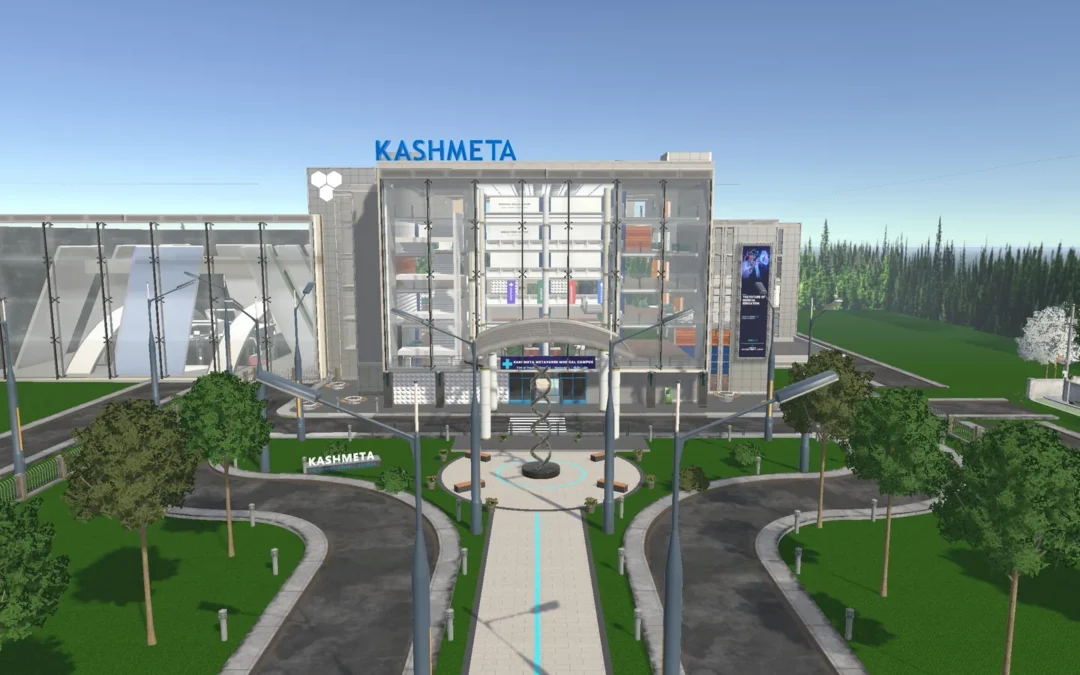
Emergency team simulation in VR lets medical students rehearse a cardiac arrest together: roles, compressions, rhythm checks, shocks, drugs and communication, followed by a debrief. It complements, not replaces, certified life-support courses and hands-on mannequin practice. On Kashmeta, up to six people can run a cardiac arrest case together in the browser, with a live monitor and a debrief at the end.
Why team skills fail under pressure
Most errors in resuscitation are not about knowing the algorithm. They come from unclear roles, instructions nobody acknowledges, interrupted compressions and losing track of time. These are team skills, and they improve when a team practises together, reviews what happened and tries again.
How a VR cardiac arrest case works
- Brief. The team gathers in the emergency room and assigns roles: team leader, compressions, airway, defibrillator and drugs, and a recorder.
- Recognise and start. The patient deteriorates on the monitor. The team confirms the arrest, calls for help and starts compressions.
- Run the cycles. The team works through rhythm checks, shocks where indicated and drugs, swapping compressors and keeping pauses short.
- Communicate. The leader gives clear instructions to named people, and team members close the loop by confirming each task.
- Debrief. At the end, the team reviews the timeline: what went well, where time was lost and what to change next run.
The roles, and what each person practises
- Team leader: situational awareness, decisions and delegation, staying hands-off.
- Compressions: rate, depth and swapping on time.
- Airway: keeping the airway open and ventilating.
- Defibrillator: rhythm checks and safe shocks.
- Drugs: preparing and giving drugs at the right time.
- Recorder: timings and reminders for the leader.
Rotate roles between runs so everyone practises leading as well as following. Always follow your local resuscitation guidelines, such as those of the American Heart Association or your national resuscitation council.
VR team simulation compared with mannequin sessions
A mannequin session teaches the physical skills: real compressions, bag-valve-mask ventilation, pad placement. A VR team case is strongest for sequence, timing and communication, and it can be repeated as often as the group likes, from different places, at no extra cost. Many students use VR to prepare before a life-support course or a simulation-centre session. Read more in simulation before patients.
Other emergency cases
Alongside the cardiac arrest, the Kashmeta emergency room has a chest-pain triage case where students decide what to do next with a live monitor and the clock running, and 15 clinical case boards across the hospital. Bedside examination lets students check oxygen saturation, breathing, blood pressure, temperature, blood sugar and capillary refill, record a 12-lead ECG and score a NEWS2 chart.
Gather your study group and open the campus free for 30 minutes in Chrome or Edge. Medical schools can run team cases with whole classes during a free 30-day pilot.
Frequently asked questions
Can VR replace a life-support course?
No. Certified life-support courses and hands-on mannequin practice remain essential. VR team simulation helps you rehearse the sequence, roles and communication before and between courses.
How many people can join a Kashmeta cardiac arrest case?
Up to six people can take roles in the same cardiac arrest case, with a live monitor and a debrief at the end.
Do we need to be in the same room?
No. Team members can join from different places on their own laptops and talk with spatial voice inside the virtual emergency room.
Is there a debrief?
Yes. Each team case ends with a debrief so the group can see what went well and what to improve on the next run.
Simulation-based practice, not an accredited qualification. Not a substitute for certified life-support training or local resuscitation guidelines.